Piero Massaro: eyewear like a tailored jacket
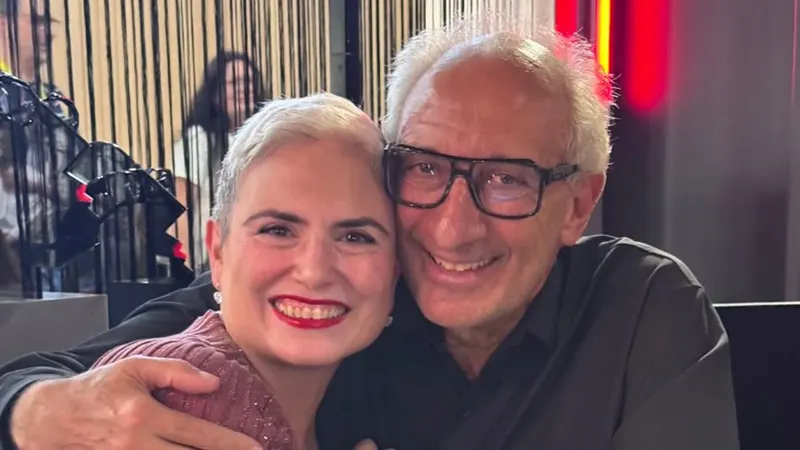
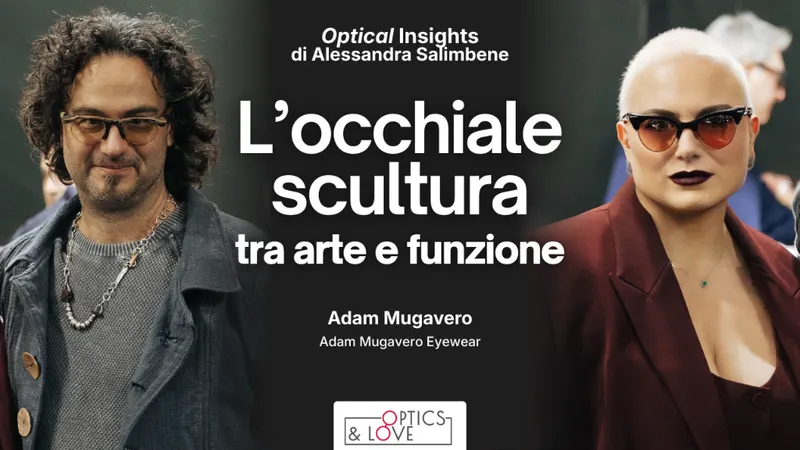
At SILMO 2026 I met Piero Massaro again, this time with Couture Visiva, a collection rooted in his past as a fashion designer. We talked about independent opticians as boutiques, about respecting the design of a frame, and about what is lost when a frame is reduced to "a front and two temples".
This year I was in Paris, away from home, yet SILMO always gives me a few people who make me feel at home. Piero Massaro is one of them. He always shows up with special eyewear, but this year he outdid himself. The day before, I had given my talk on independent optical retail in Europe, and our conversation picked up exactly where that talk ended.
Who Piero Massaro is
Piero Massaro was born in Sicily and has made the Veneto region his home. In 2003 he founded Italiana Design in Mirano, near Venice, the company that makes his handmade Italian frames in limited, numbered editions. He received the Jury's Special Prize at the Silmo d'Or in 2014 and the Japan Eyewear Award in 2020, and this year he is again a Silmo d'Or nominee for technological innovation with his bayonet hinge.
Couture Visiva: the fashion designer returns
For the new collection Piero went back to his old job as a fashion designer. He took the fabrics of classic men's overcoats and had them reproduced in cellulose acetate by Mazzucchelli, exclusively for his brand. Some finishes even recall knitwear. The name, Couture Visiva ("visual couture"), says it all: a frame treated like a garment, with the same attention to material, cut and fit.
An optician is not a convenience store
I asked him what an independent optician should choose today to succeed against the current. His answer was clear. An optician no longer needs to behave like a tobacconist, an Italian shorthand for a shop that simply hands over whatever people ask for. A customer who chooses a store expects to be offered something new, not the same uniform everyone else is wearing.
That echoes what I told the audience the day before, when I left them with two tasks: decide what you want to be remembered for, and decide which customer you are willing not to serve. Being special means choosing who you are for and having the courage not to be for everyone. Piero adds that an optical store should work less like a pharmacy and more like a boutique, offering a different, stylish, even somewhat exclusive product.
Respect the design of the frame
The most technical part of our talk was about fitting. If a designer built a frame around a base 4 lens and the optician mounts a base 6, the wrap angle changes, and with it the shape, the design and the fit. Then there is the advice Piero gives everyone: don't bend the temples. A straight temple is designed that way so it doesn't press on the nerve behind the ear, and a frame that presses is a frame the customer eventually takes off. If it slips, close the pad arms slightly or bend the temple tip a little. For Piero a frame should be "a jacket made by a tailor", something you wear without feeling it. I can vouch for that: the frames I wore during the interview are bold, yet I didn't feel them at all.
"Don't wear the white coat"
Piero also has a direct message for some optometrists. He respects their professionalism, but asks them to leave the white coat behind: they are neither surgeons nor pharmacists, and they should think of their practice as a boutique in every respect. I agree, and I have said harsher things about that white coat myself.
His second message is about how frames are described. Calling a frame "a front and two temples" belittles the product and the person who designed it. Each of his models starts from at least 20 technical drawings. Every frame is handled about 480 times, uses a hinge in AISI 316L steel (the same steel a well-known Swiss watchmaker uses for its cases), is never painted so it won't irritate the skin, and the front alone takes 17 minutes of CNC milling before it is finished by hand.
He closes with a line from a friend, an eye surgeon at the Ospedale dell'Angelo in Mestre: you don't put a Ferrari engine on a Fiat 500 chassis. Two high-end lenses deserve a frame that matches them. Optometrists have spent years refining visual quality through study and peer exchange; Piero asks them to bring the same rigour to frames.
My take
What Piero asks of opticians is consistency. It makes little sense to invest time and expertise in choosing the right lens and then treat the frame as a generic holder, or to call yourself a boutique while selling only what customers have already seen elsewhere. A store that knows who it serves and truly understands the frames it offers has a story to tell, and that story shows up even in the way a temple is adjusted.
💬 A question for you: when you dispense a frame, do you respect the designer's intent, or do you adapt it to the customer however it comes?
If this theme concerns a decision for your optical practice or a company project, the first step is a call: we start from your context.
Book a call