
Neuromarketing for opticians
Neuromarketing applied to optics uses what neuroscience and behavioural economics know about decisions, emotion, attention, memory, trust, loss aversion, identity, to understand how a customer chooses glasses and how the optical practice can support that choice with clarity, without forcing it.
A pair of prescription glasses is not a purchase like any other: it sits on the face, changes the expression, says something about the person wearing it. That is why the choice is emotional first and rational second, and the way the practice presents the solutions matters as much as the solutions themselves.
This page gathers, in order, the nine neuroscience articles published in the magazine and explains how to use them in daily work and in training the team.
Understanding the choice, not manipulating it
In the method, these mechanisms sit inside Eyemage’s consultative selling: listening, understanding the person, proposing vision solutions, handling objections. Knowing them serves to remove obstacles to the decision, not to add pressure.
The nine neuroscience articles, in order
One introductory article and eight mechanisms, one per article.
- Eyewear and neuroscience: an introductionNeuroscience studies how our brain works: how we perceive, how we make decisions, how we feel emotions. Neuromarketing applies this knowledge to choice and purchase contexts, helping the optician understand the customer’s decision mechanisms.
- Emotion-driven decisions: customers decide with their gut first, then with their headNeuroscience teaches us that people feel first and rationalise afterwards. In optics this mechanism is amplified: glasses affect self-image and the way we feel looked at.
- Selective attention: the brain only sees what it considers relevantOne of the most common mistakes in communication is thinking that people see everything. Neuroscience shows the opposite: the brain filters reality through selective attention, seeing only what it judges relevant at that moment.
- Cognitive overload: when too much information blocks the choiceOne of the most widespread paradoxes in retail is thinking that more choice means a better decision. Neuroscience tells us the exact opposite: when the brain is exposed to too many options, it goes into cognitive overload and often does not decide at all.
- The role of context: why how we sell matters as much as what we sellNeuroscience teaches us that decisions do not happen in a vacuum, but are strongly influenced by context. Environment, light, language, the staff’s attitude: everything helps create an emotional state that steers the customer’s choice.
- Trust and consistency: why the brain chooses those who make it feel safeOf all the factors that influence a purchase decision, trust is the most decisive. The human brain is constantly looking for safety: every interaction is assessed to understand whether the person in front of us is reliable, predictable, consistent.
- Loss aversion: why the fear of making a mistake weighs more than the desire to improveThe human brain perceives a possible loss as emotionally more intense than a potential gain. In the optical practice the customer is not just weighing benefits: above all, they are trying to avoid spending too much, making the wrong choice or regretting it.
- Memory and recall: why the customer does not remember what we explain, but how they feltThe human brain is not designed to store large amounts of technical information, but to keep emotional experiences. The customer will forget technical details, but will remember whether they felt welcomed, listened to and respected.
- Identity and belonging: choosing glasses is choosing who I want to beGlasses are not just a tool for seeing better: they change our expression, they say something about us. From the point of view of neuroscience, choosing glasses is never a purely functional decision, but a choice of identity.
How the nine mechanisms are used
Each article describes one mechanism and its effect on the choice of glasses. In the practice they translate into a few concrete attentions.
- Reduce the alternatives shown at once: a reasoned selection avoids overload and helps the decision.
- Look after the context: light, order, language and the attitude of the person welcoming the customer influence the decision before any explanation.
- Keep what is communicated outside consistent with what is experienced inside: trust comes from continuity.
- Make the choice safe: explaining what happens next, trials, guarantees and after-sales service reduce the fear of making a mistake.
- Leave a memory: the customer does not remember the technical features, they remember how they felt.
- Start from the person: glasses are also a choice of identity, and the consultation has to recognise it.
From the series to the courses
The mechanisms of the series are part of the consultative selling programme with Eyemage, available as in-practice training and, from 16 November 2026, in the online Academy; in English, they are part of The Charismatic Practice.
Where these mechanisms are applied
From the magazine, on related themes
The whole magazine →


Eyemage
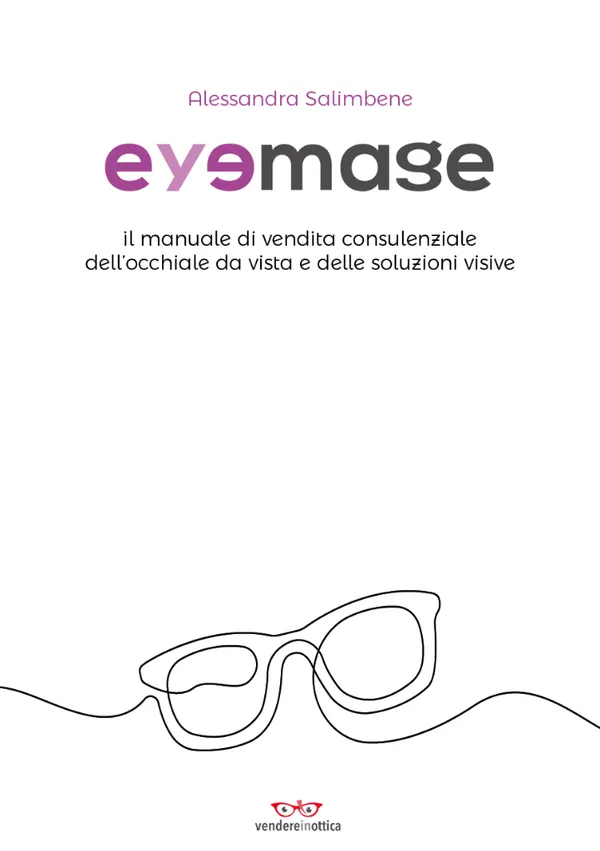
The handbook of consultative selling for prescription eyewear and vision solutions: listening, relationship, proposal, handling objections. The mechanisms of the series applied to the selling process. In Italian.
Using what neuroscience and behavioural economics know about decisions to understand how a customer chooses glasses and how the optical practice can support that choice with clarity. It is not a persuasion technique: it is a way of removing obstacles to the decision.
Because the fear of making a mistake weighs more than the desire to improve, because too many alternatives block the choice, or because trust is missing. The nine articles of the series describe these mechanisms one by one.
Not if it serves to understand and to support. The line is clear: making the choice simpler and safer for the customer, not pushing them towards what they do not need. Eyemage’s consultative selling starts from listening, not from pressure.
With a few concrete attentions: a reasoned selection instead of too many alternatives, a well-kept context, consistency between communication and practice, information that makes the choice safe, a consultation that starts from the person.
The mechanisms of the series are part of the consultative selling programme with Eyemage and, in English, of The Charismatic Practice.

Alessandra Salimbene is a consultant, trainer and author for optical retail. She helps independent optical practices, groups and companies in the sector with strategy, marketing, branding, digital marketing and training, using the Charismatic Method and the Optical Retail Marketing Wheel. She founded Optics & Love and wrote Il Centro Ottico Carismatico, L’Optometrista Carismatico and Eyemage. Alessandra’s page →