
Optical retail in Italy and the Optical Retail Marketing Wheel
Towards a sustainable development model for the independent optician.
Alessandra Salimbene’s degree thesis, defended at the University of Turin in 2023, puts in order more than twenty years of work in the optical sector: from the history of eyewear to today’s independent optical practice, from the Charismatic Method to the Optical Retail Marketing Wheel. This page summarises it chapter by chapter. The thesis is written in Italian.
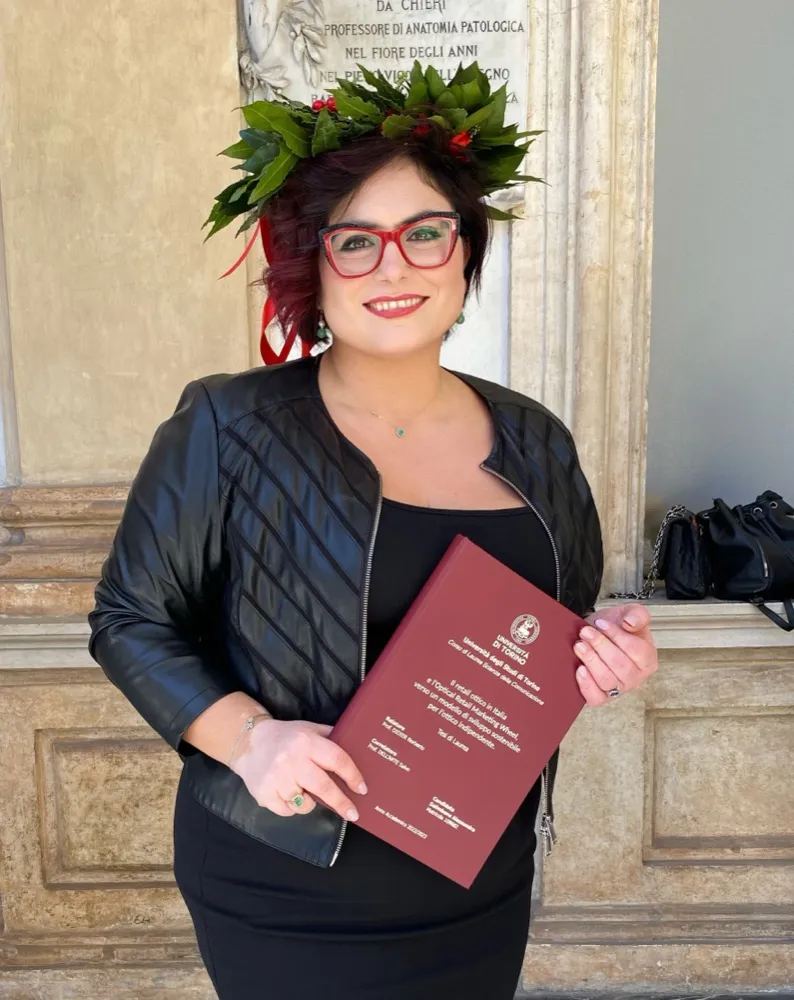
The thesis in brief
- Title: Il retail ottico in Italia e l’Optical Retail Marketing Wheel, verso un modello di sviluppo sostenibile per l’ottico indipendente (Optical retail in Italy and the Optical Retail Marketing Wheel, towards a sustainable development model for the independent optician)
- University: University of Turin, academic year 2022/2023, defended in 2023 with 110 cum laude
- Supervisor and co-supervisor: Prof. Norberto Didier, Prof. Salvo Dell’Arte
- Structure: Six chapters plus bibliography: introduction, the optical tradition in Italy, a profile of the independent optical practice, the Charismatic Method, the Optical Retail Marketing Wheel, conclusions. 135 pages, in Italian
Introduction: why a method is needed
The project concerns the optical market in Italy and in particular independent optical retail. The aim is a guiding method for designing the business model of the independent optician, with inside it a marketing mix model that is simple to apply for an entrepreneur without specific marketing management skills.
The contents come from more than twenty years of work, research and study in the sector, with every type of company in the supply chain, from industry to distribution, and with the trade associations. The motivation is to bring order to a market in which competitive forces risk crushing the independent optical practice and the figure of the optician-optometrist, which reflect the Italian tradition of quality local commerce.
The optical tradition in Italy, from the origins to today
Italian optical retail has characteristics that differ from other countries, linked to two historical factors: the history of spectacles themselves, which were effectively born in Italy, and the characteristics of Italian local commerce. The chapter retraces in brief the history of eyewear, the creation of the Belluno eyewear district and the modern age of Italian eyewear with Luxottica, without forgetting companies outside Cadore such as Galileo and Shalcon.
It closes with the state of the optical industry today and its connection with the retail landscape: the context in which the independent optical practice has to find its own space.
A profile of the independent optical practice
After an introduction to the vision professions in Italy (optician, optometrist, ophthalmologist: who does what), the chapter describes the Italian optical retail landscape, between chains, mass retail and independents, and proposes eight types of optical practice: the traditional professional practice, the small neighbourhood practice, the boutique practice, the convenience practice, the professional optometric studio, the senior optician, the second- or third-generation optician and the optical start-up.
It then clarifies what "independent optician" and "niche eyewear" really mean, and addresses the challenge of the independent practice in the post-pandemic market: the concentration of the sector, the choice between following the programmes of the large groups and seeking a new positioning space on research eyewear and professional services, the recognition of the optician’s social role during the lockdown.
The Charismatic Method for the independent optical practice
The method starts from the person, even before the company: the entrepreneur identifies within themselves their own idea of value creation and what their business should bring to the market, starting from skills and passions. Charisma works towards a limited group of people: the business must resemble the entrepreneur to attract people who resemble them. Hence the path from charisma to personal brand and back.
The method is organised in three phases, following the so-called rule of three. Thinking: the entrepreneur works on beliefs, motivations, values and passions as the basis of the business. Strategy: the design of the business model, with the distinctive elements of the offer, the reference values for the audience, marketing positioning, professional and commercial, and the planning of short-, medium- and long-term objectives. Action: practical implementation, with a specific, hybrid marketing model and criteria taken from project management.
The Optical Retail Marketing Wheel
The model is based on ten areas of activity that form the foundations of the optical practice’s marketing mix and can be adapted to other commercial and professional businesses: strategic planning, store design and visual merchandising, assortment and category management, professional services, pricing policies, communication (personal, with the figure of the Super-seller, and external), CRM and customer service, promotions and advertising, team management, relational capacity.
Two cross-cutting elements support the wheel: IT organisation, because today no activity is carried out without data and without adequate platforms and devices, and operational planning, which puts the activities of the various areas into practice. The path starts from strategic planning and arrives at the synthesis: the company’s relational capacity in relation to the system it belongs to.
Conclusions: you do not need to apply everything
The thesis proposes a definition of the optician-entrepreneur and of the independent optical practice as a point of reference for the prevention and visual wellbeing of the whole family, and identifies the obstacles that today require a rapid managerial and entrepreneurial maturing of the sector. The guiding method, in three phases, leads to a sustainable, competitive and differentiated business model; within the action phase, the Wheel organises the ten areas of the mix with the two cross-cutting phases.
All the concepts have been tested in the field over more than twenty years of work with different businesses, in Italy and partly abroad. As Alessandra says in her courses, it is not necessary to apply the method in full: it is often enough to become aware of all the areas to manage and of the connections between them, and to make even just a part of them operational. The results and the learning curve will provide the motivation to expand and improve.
From the thesis to the magazine
The whole magazine →
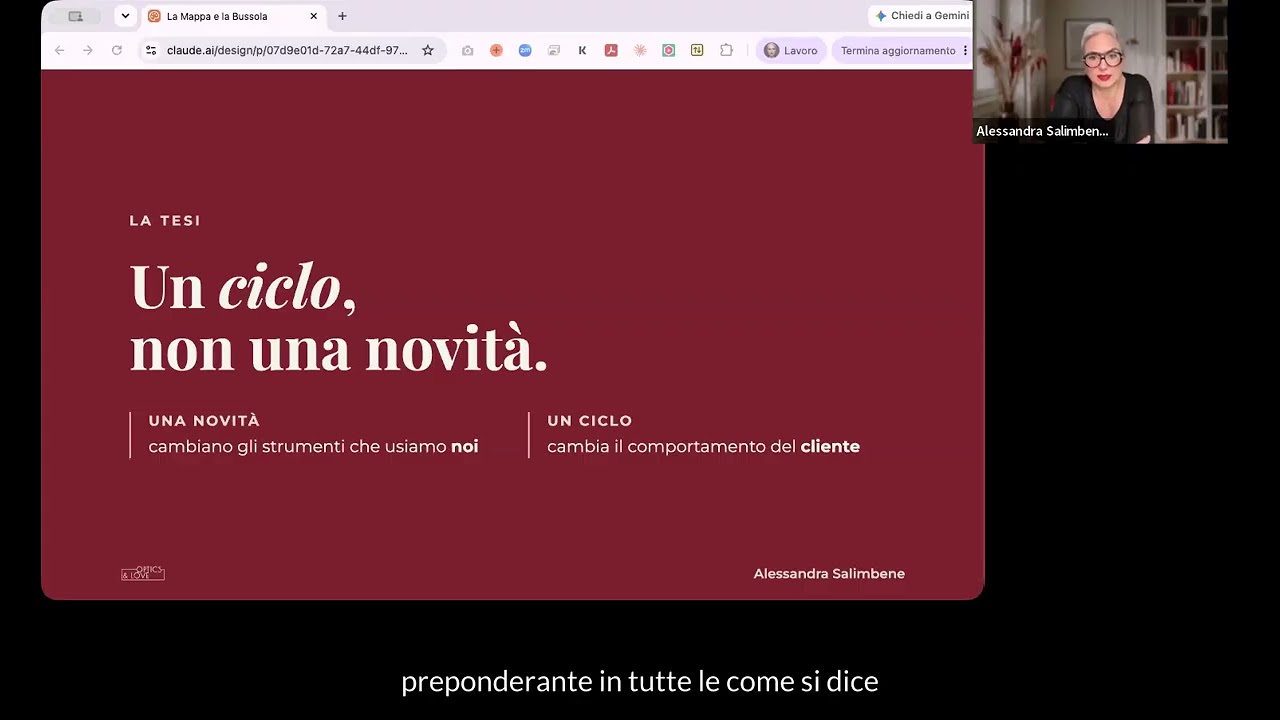
The method described in the thesis is the same one used by Trade Up and, in English, by The Charismatic Practice. The first step is a call.